In this edition we focus on:
- How Samsung and Apple are designing devices for scale, not just users
- What recent OS updates reveal about the future of mobile security and management
- How AI is shifting from assistance to autonomous execution on the device

Enterprise hardware is finally catching up with reality
For years, conversations about mobile devices in business environments were dominated by specifications: faster processors, better cameras, more memory. While these elements still matter, the latest launches from March 2026 suggest that something more fundamental has shifted.
Today, enterprise hardware is no longer designed primarily to impress individual users. Instead, it is built to perform reliably at scale, integrate into existing ecosystems, and support long-term management strategies without introducing unnecessary complexity.
The newest devices from Samsung and Apple reflect this change very clearly. What stands out is not a single breakthrough feature, but a consistent direction: hardware that is predictable, efficient, and increasingly aligned with the realities of enterprise environments.
Samsung: designing for scale rather than spectacle
Samsung’s Galaxy S26 series is a clear example of how this shift is taking shape in practice. At first glance, the devices may not seem radically different from previous generations, but a closer look reveals a more deliberate approach to how they are designed and positioned for enterprise use.
Instead of focusing on standout consumer features, Samsung has prioritised stability and consistency across the entire lineup. Improvements in processor efficiency and thermal performance are not just about better benchmarks, but about ensuring that devices behave reliably throughout a full working day, even under demanding conditions such as field work or continuous collaboration.
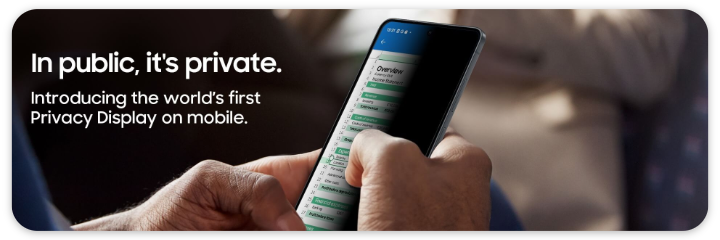
One of the more interesting additions is the hardware-based Privacy Display introduced in the Galaxy S26 Ultra. Unlike traditional privacy filters, this feature is built directly into the screen and can be managed at the application level. This means that sensitive information can be protected without relying on external accessories or user habits, which often prove difficult to enforce in larger organisations.
What makes this lineup work is not a single highlight, but how well everything fits together. Devices are built around consistent architecture, energy efficiency, and long lifecycle management, which makes them easier to deploy and standardise at scale.
In practice, this reduces the number of variables IT teams need to manage. And when devices behave consistently, solutions like Essentials Mobile Device Management and Essentials Mobile Threat Defense can focus on optimisation instead of constant troubleshooting.
Apple: expanding access while reinforcing the foundation
Apple’s latest releases follow a slightly different path, but they lead to a similar outcome. Instead of focusing on a single segment, Apple is expanding its portfolio across different price points while maintaining a consistent architecture and security model.
The introduction of the iPhone 17e illustrates this approach well. By bringing the latest Apple Silicon into a more accessible device, Apple reduces the gap between high-end and entry-level hardware. For enterprises, this can simplify device strategies, as more users can operate within the same ecosystem without major compromises.
Apple continues to strengthen its position in areas that are less visible but highly relevant. One of the most notable developments is the approval of iPhones and iPads running iOS 26 to handle information classified up to the NATO Restricted level. This certification, based on evaluation by Germany’s Federal Office for Information Security (BSI), relies entirely on built-in mechanisms such as encryption, biometric authentication, Secure Enclave, and memory integrity enforcement.
This milestone demonstrates how far native device security has evolved. Rather than relying on external solutions, the devices themselves provide a level of protection that meets strict regulatory requirements.
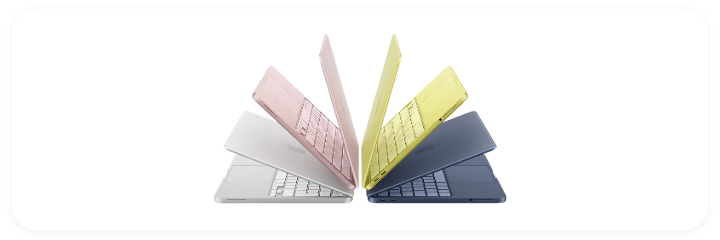
The broader Mac lineup supports this direction by focusing on incremental but meaningful improvements. Updates to MacBook Air and MacBook Pro with M5 chips bring better performance efficiency and longer battery life, while the introduction of MacBook Neo lowers the entry barrier for organisations looking to adopt Apple devices at scale.
Taken together, these changes suggest that Apple is not trying to redefine enterprise hardware, but rather to make it more accessible and easier to standardise. This kind of consistency becomes particularly valuable in environments where devices need to integrate with broader strategies such as zero trust, where trust is based on verified device states rather than assumptions.
Insights from Mobile World Congress in Barcelona
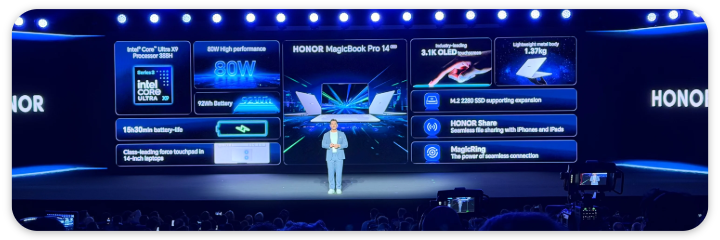
Mobile World Congress 2026 highlighted how enterprise mobility is shifting from isolated devices to integrated decision-making platforms. The key trend is clear: mobile technology is now embedded into business workflows, security models, and long-term architecture decisions instead of sitting at the edge of IT strategy.
Many of these trends were visible across exhibition halls and conference tracks in Barcelona. While the event featured a wide range of new concepts, from foldable devices to AI-driven interfaces, the underlying theme was clear: mobile technology is becoming more deeply integrated into enterprise ecosystems and core business processes.
Vendors talked less about single-feature highlights and more about consistency, manageability, and interoperability. For large organisations, this matters more than isolated innovation because it directly affects how quickly devices can be deployed, secured, and updated.
For example, agentic AI capabilities demonstrated on new flagship devices showed how assistants can act across applications, schedule tasks, or collect information without constant user interaction. Demonstrations from device and platform providers illustrated how these agents can, in the future, book travel, approve expenses, or adjust device settings based on organisational policy.
However, this new autonomy also raises expectations for governance. Enterprise mobility teams must decide which actions should be fully automated, which require human approval, and how audit trails will be maintained when AI systems perform tasks on behalf of users.
Several sessions and discussions at the event returned to the same point: the mobile ecosystem is converging with identity, access management, and security operations. Device choices now have visible consequences for compliance, data protection, and resilience strategies.
Mobile OS and updates: where stability is defined
Mobile operating systems are where long-term stability, security, and manageability are established. Hardware innovation matters, but OS design and update models determine how resilient a fleet can be in day-to-day operations and when facing active threats.
Recent updates show that both Apple and Google are investing heavily in this layer. iOS 26.4 introduces enhancements such as expanded encryption for RCS messaging and improved memory protection mechanisms, allowing applications to benefit from stronger safeguards against potential exploits.
Meanwhile, Android is evolving towards a more unified structure with a consistent kernel across devices, often referred to as One OS. This approach reduces fragmentation, which has historically been one of the biggest challenges in managing Android environments at scale.
The importance of these changes becomes clearer when looking at the broader ecosystem. According to TechRadar, Google rejected nearly two million Android applications in 2025 and blocked over 80,000 developer accounts. Additionally, more than 255,000 apps were prevented from accessing sensitive user data.
These figures highlight the scale at which mobile platforms operate to maintain trust. They also underline why organisations cannot afford to treat OS updates as optional or purely operational tasks.
Security challenges keep evolving. The Coruna exploit kit targets older iOS versions, demonstrating how unpatched devices can still be leveraged in large-scale attacks. Similarly, the Bluetooth Fast Pair vulnerability shows that even peripheral devices can introduce unexpected risks if they are not properly maintained.
In this context, keeping devices up to date is not simply a technical recommendation, but a core part of maintaining a secure and stable environment. Solutions that support continuous management and monitoring help organisations maintain visibility and control as these ecosystems evolve.
AI and agentic interfaces: from assistance to autonomy
Artificial intelligence is moving from simple support into agentic interfaces that can act across applications, raising both productivity potential and new security requirements. Mobile devices are shifting from passive endpoints into active participants in everyday workflows.
Another important development shaping the mobile landscape is the evolution of artificial intelligence. Instead of acting purely as a tool, AI is starting to take on a more active role. The so-called “agentic” approach focuses on systems that can anticipate user needs and perform actions across applications without explicit input.
This is already visible in platforms like Omnissa’s Omni assistant, which can analyse live environments and provide contextual support without requiring manual navigation through systems.
At the same time, more processing is happening directly on the device. On-device AI, often supported by inputs such as camera data and sensor signals, allows for faster and more context-aware interactions while reducing dependence on constant cloud connectivity.
This changes the role of mobile devices quite significantly. They are no longer just endpoints, but active participants in workflows. They can trigger processes, respond to alerts, and adjust configurations based on context.
That makes it even more important to ensure that these devices remain in a trusted state, especially when they are able to act on behalf of users and interact with sensitive business systems.
A more mature ecosystem
Across hardware, operating systems, and AI, enterprise mobility is entering a more mature, interconnected phase. Individual upgrades matter less than how well the full stack works together to support secure, scalable, and resilient mobile work.
Looking at all these developments together, March 2026 does not feel like a moment of disruption, but rather one of consolidation.
Hardware is becoming more predictable and aligned with enterprise needs. Operating systems are reducing fragmentation and strengthening their protective mechanisms. AI is evolving towards more autonomous and context-aware interactions.
Individually, these changes may seem incremental. Collectively, they point to a more mature and cohesive mobile ecosystem. The focus is shifting away from selecting the most powerful devices, and towards building environments that are stable, scalable, and ready to support the next generation of mobile work.
Organisations that invest in lifecycle management, robust OS governance, and trustworthy AI deployments will be better positioned to benefit from this evolution.
Sources and deeper insights
For readers who want to explore these themes in more depth, several recent analyses and briefings provide useful context on mobile security trends, OS hardening, and AI in enterprise mobility.
If any of the topics above caught your attention, these are worth a closer look:
- Security Bite: The two biggest security upgrades in iOS 26.4 explained
- Google rejected nearly two million Android apps and blocked more than 80,000 developer accounts from Google Play in 2025 (TechRadar)
- Coruna iOS Exploit Kit Uses 23 Exploits Across Five Chains Targeting iOS 13–17.2.1 (The Hacker News)