Mobile World Congress 2026 showed a clear shift in enterprise mobility. AI is moving from being assistive to becoming agentic (that’s like your parents moving into your phone as a personal assistant), private 5G is gaining real traction thanks to geopolitical threats, and low Earth orbit satellite roaming for 4G – when you operators support it and devices are evolving from just efficiencies to secure/privacy/efficient platforms - thanks to Europe. The focus is no longer on hardware and network - it's also about control, security, and end user experience.
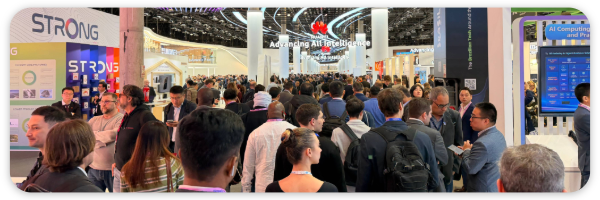
I’ve been going to MWC for 13 years. Long enough to remember when everything revolved around specs. Bigger screens. Faster chips and cellular bandwidth.
That’s not what this year felt like.
Walking through the halls in Barcelona, the most interesting moments didn’t happen on stage. As usual, they happened in corridor conversations between meetings or over quick coffees and lunches - where people tend to be a bit more honest.
And the tone has shifted.
People are no longer asking, “What's the next AI service?”
They’re asking, “How do we move forward but stay secure, combined with privacy in Europe?”
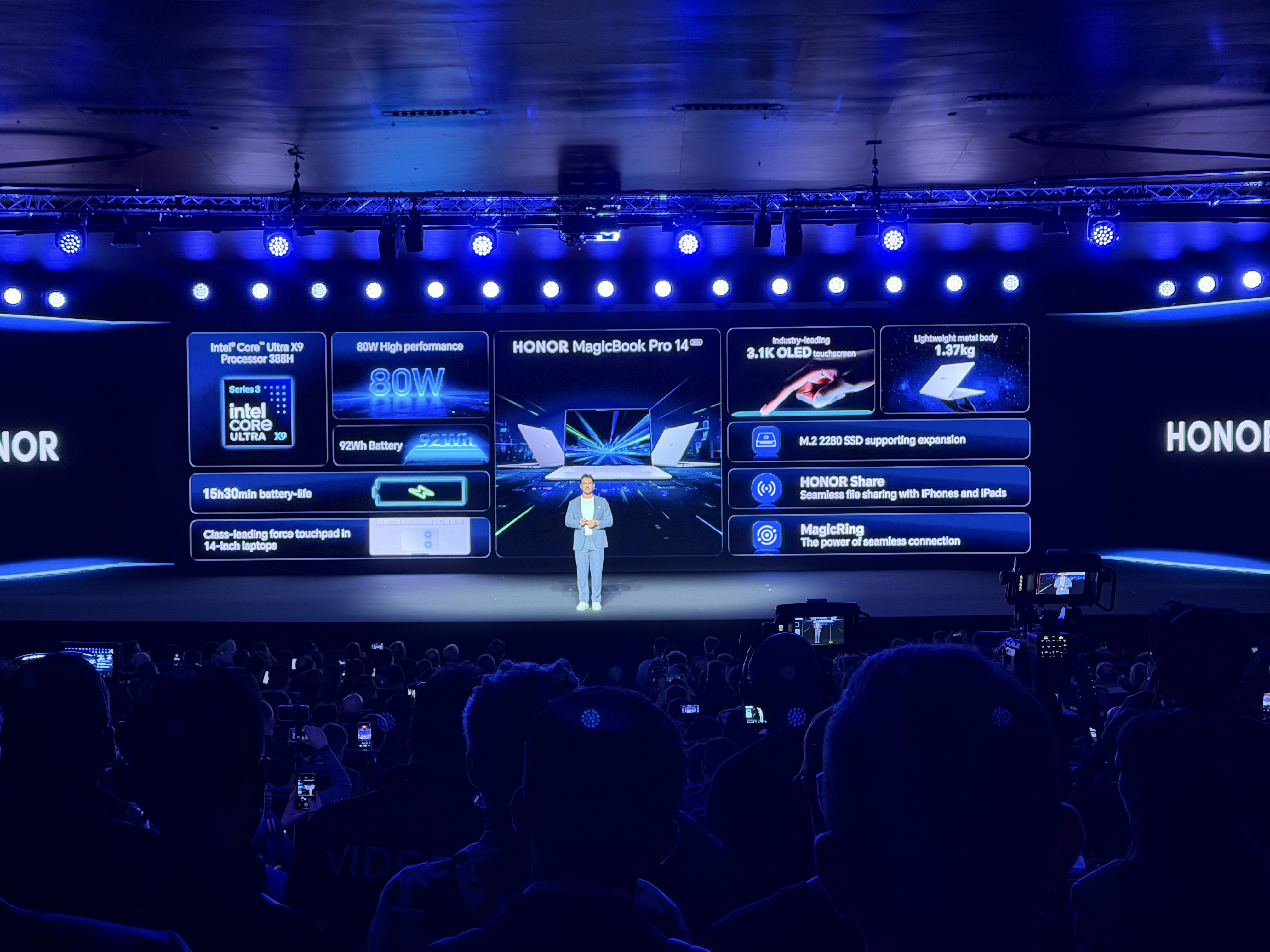
With more than 105,000 people and over 2,200 exhibitors, MWC26 was as big as ever. But it felt more serious this time. Less about showcasing possibilities, more about dealing with realities.
Here’s what stayed with me.
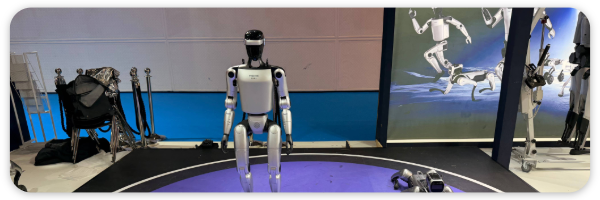
AI is starting to act on our behalf
A few years ago, AI at MWC felt like something you experimented with. Interesting, but not essential.
This year, it felt different - not just consumer-oriented. More real, with AI adoption in business picking up.
In several conversations, both with vendors and customers, the same idea kept coming up: how can we use AI in the right way, with privacy and full security on the device?
Smartphones 4.0 is on its way - more capable and natively including a personal assistant as your main work and personal tool, maybe your only needed device in more than 60% of the situations. And I am not saying fewer devices, but more capable devices in every aspect.
Google is pushing this direction with Gemini, connecting video assistance and data across apps, emails, and services, then using that context to act. Not just suggesting the next step, but executing it as if it was your native parental-personal assistant, still fixing everything in your life.
That sounds like a step forward, but it changes the relationship completely. As one Chinese vendor said, “From the moment you turn the smartphone on, it starts to learn and react to your personal and work life - the device will assist from now on!” No way! I still get goosebumps thinking about this comment. I need to be sure that the device is capable of handling all AI requests/analysis natively on the device - just for me, my work, and my family.
Because when your device starts acting on your behalf, you lose some visibility into what is happening and why. And that creates a different kind of discussion. More than once, I saw conversations drift from excitement to hesitation within a few minutes, like, “...that is in service today in China but not available abroad,” and “...sorry, this device is not available in Europe...” “We have not decided yet to move into Europe because of privacy!”
The shift itself is clear. AI is moving beyond being, at best, a passive or assistive tool and becoming something that can carry out multi-step tasks on your behalf with minimal input.
From experience, when you see one cockroach, it’s never alone. Most smartphone users treat their device as a mix of pacemaker and brain… without any real protection. This needs to stop. Companies must take responsibility for both their business and how employees use these devices. End users are not equipped to manage this on their own, and there are simply too many temptations.
Why connectivity is no longer just about coverage
One comment I heard this week still surprises me. It came casually, almost as a side note. “We don’t trust the network any more.” Why haven’t people said this more often?
A few years ago, that would have sounded extreme. Now it comes up more often than you might expect.
To understand why, it helps to unpack what people mean when they talk about private 5G.
In simple terms, private 5G is a dedicated mobile network built for a single organisation. It can run on-site or in a controlled environment, giving full control over data traffic, performance, and access. Unlike public networks, it is not shared, and it can be tailored to very specific operational needs.
That is why it is gaining traction.
At MWC26, the conversations around private 5G felt more mature than before. Less theoretical. More tied to real deployments, particularly in healthcare, energy, and transport.
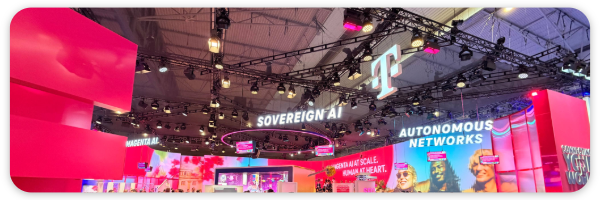
What is emerging is not a single solution, but a progression. Many organisations start with public networks, then move to secure APNs, then explore network slicing when operators are able, and in some cases move all the way to fully private setups. Why? Because they need to be able to run the data service for all their users, regardless of situations. As I heard “How do we dare to trust the operator with SLA, services and security, if something big is happening” or “we need to cut the cable to the world, if something hits us - and we need expertise locally to run the services” Sovereign offering was the buzz word - but no one bothered to define it. A lot of customers are looking into on-premise private 5G solutions thanks to geopolitics.
At the same time, low orbit (LEO) satellite connectivity is starting to play a supporting role. Direct-two-device (D2D) communication means coverage is no longer limited in the same way, which changes how networks are designed in remote, rural, or critical environments.
Industry bodies like the GSMA have been tracking this shift closely, especially the rise of private networks as enterprises look for more resilience and control.
And then there is 6G. Still early, but already visible in demos and discussions. Not as a launch, but as a direction the industry is aligning around. It's fantastic to see Apple demo handover from 5G to 6G live on Ericsson's booth - they are no longer behind on the cellular network but actually a frontrunner. We are already seeing 3GPP planning for LEO to be part of 6G design- and probably seeing the first commercial networks 2030+.
What used to be a simple question of coverage and speed is turning into something more strategic, and the old question, “What’s your SLA on this service?”
Connectivity is becoming something you design around your business. Not just something you buy.
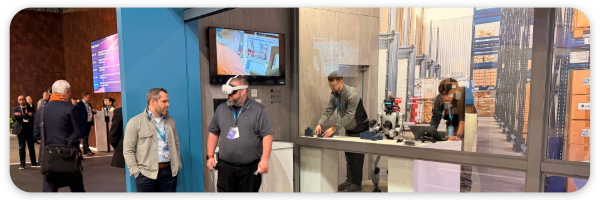
The device is evolving. But the real change is in its role
There was no shortage of new hardware, and the hardware seems to be designed as a Swiss Army Knife device for at least 60% of the work situations, even before voice and video assistance kicks in.
Foldables are now everywhere. Some vendors are already experimenting with trifold designs. Smart glasses appeared across multiple booths, and even more experimental concepts, like smart contact lenses, are starting to surface. Most of the devices are designed for consumers, but as we all know, that may be good enough for businesses.
So yes, there is still a lot of innovation in devices. Camera, 5G slicing, private 5G support, AI native capabilities, VIP B2B support via resellers, using mobile chipsets on Macs (Neo), and also a new Android Kernel for all Google Devices- Chromebooks, XR, and Wearables included Android Enterprise in the near future.
But what stood out to me is that the innovation is no longer just about the device itself. It is about what the device enables.
Several demos showed how the smartphone is starting to replace the traditional computer. Connect it to a screen and keyboard, and you have a full desktop experience. In some cases, there is no laptop at all. Just a screen, keyboard, and a mouse powered entirely by the phone.
That shift has been talked about for years, but it finally feels closer to practical use. We first found this one on iPads more than 3 years ago, even supporting external cameras.
At the same time, the conversation around devices is becoming more pragmatic. It is less about specifications and more about behaviour. How secure the device is. How well it can be managed. How it fits into a wider ecosystem.
Security plays a big role here. Google Pixel, leading with vanilla Android, a 97% score in security benchmarks from Omdia, is not just a marketing point any more. It influences real decisions. Apple continues to focus on device-level control for AI and privacy, plus of course, cool new features, while Samsung expands its features with software-controlled privacy screen filter and enterprise capabilities.
In one meeting, someone summed it up in a way that stuck with me.
“We need to step up, because the biggest threats are in the end user's pockets.”
That feels like a turning point.
What is agentic AI in mobile?
Agentic AI refers to systems that can take action on behalf of the user, not just respond to prompts or video assistance.
In a mobile context, this means your device can understand context across cloud services, apps and data, make decisions based on that context, and carry out tasks without constant input.
At MWC26, this shift was visible across multiple vendors. AI is moving from being an oracle - answering all your questions to being a personal assistant handling all your life issues, which makes questions around privacy, control and security extremely critical.
Why are companies investing in private 5G?
Companies are investing in private 5G because standard public networks do not always meet enterprise requirements.
A private network allows organisations to control how data moves, ensure consistent performance, and reduce dependency on external infrastructure.
This is particularly important in sectors such as healthcare, manufacturing, farming/fish farming and energy, where connectivity is directly tied to operations and risk.

What I’m taking away from MWC this year
If I had to sum it up, it would be this: mobile is growing up. It’s no longer a toy or an add-on on top of the business. It’s becoming part of the core, just like it already is in people’s everyday lives.
AI is embedded and starting to act. Connectivity is designed around risk and control. Devices are turning into platforms, not endpoints.
And maybe most importantly, the conversations are changing. There’s less excitement about features and more focus on responsibility. That’s new. And honestly, it’s overdue.